On thinking about this, it has basically the same trajectory as the ship, which is to use the moon’s gravity to come around and head back to earth. So the wastewater would do the same?
Additionally orbital mechanics would break down. If a dragon spacecraft at the same altitude as the ISS wouldn’t experience the same gravitational acceleration they would have differing orbital periods and thus velocities and could never dock (or perform proximity operations).
If the waste water has not entered the lunar gravity, then i imagine itll return to earth after a while. Keep an eye out for raining turds for the next 50 years or so


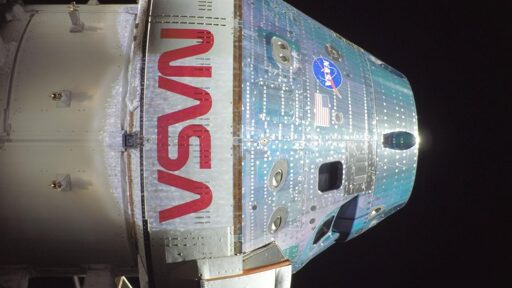
So they just dump the wastewater into space? What happens when the next mission hits that at 2000mph?
Space big, like really big. Everything moves in circles kinda. Nothing goes the same way twice more or less, just a few special places. So its fine.
On thinking about this, it has basically the same trajectory as the ship, which is to use the moon’s gravity to come around and head back to earth. So the wastewater would do the same?
Maybe, assuming no active course corrections. Even still, differing mass would change the orbit with time when reaching moon or earth, no?
Edit: because gravity acts on differing masses different.
No it doesn’t. That’s literally its main distinguishing point.
Classic physics experiment: Drop a block of steel and a feather in a vacuum. Which hits the ground first? (On earth, with the same fall height, etc)
Tap for spoiler
Both impact the ground at the same time
Are you sure? I thought the experiment is the same mass of feathers and steel.
Yes
Wikipedia: Gravitational Acceleration first paragraph. Follow the [1] citation for a better source than Wikipedia.
Additionally orbital mechanics would break down. If a dragon spacecraft at the same altitude as the ISS wouldn’t experience the same gravitational acceleration they would have differing orbital periods and thus velocities and could never dock (or perform proximity operations).
TIL. Thanks :)
The waste water dumps also travels at 2000mph, so it just floats in space with them until it flies off in its jettisoned direction.
But they are on a return trajectory because of the moon’s gravity. So I guess the wastewater will come back towards earth?
If the waste water has not entered the lunar gravity, then i imagine itll return to earth after a while. Keep an eye out for raining turds for the next 50 years or so