

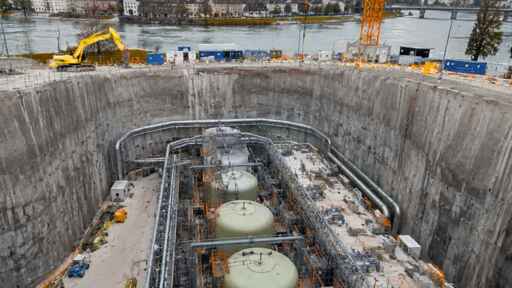
The article doesn’t explain the battery, making it a bullshit site if you ask me, here is what they are talking about:
https://en.wikipedia.org/wiki/Vanadium_redox_battery
'The vanadium redox battery (VRB), also known as the vanadium flow battery (VFB) or vanadium redox flow battery (VRFB), is a type of rechargeable flow battery which employs vanadium ions as charge carriers.[5] The battery uses vanadium’s ability to exist in a solution in four different oxidation states to make a battery with a single electroactive element instead of two.[6]
For several reasons, including their relative bulkiness, vanadium batteries are typically used for grid energy storage, i.e., attached to power plants/electrical grids.[7] ’
If I heard this on a different situation I would have thought this is an AI hallucination.
I don’t think I understand any better what the battery is then I did before. As per usual Wikipedia sucks at explaining concepts that you don’t actually already understand.
Here’s the short version.
A normal battery is a sealed cell. It has a positive and negative electrode, with an electrolyte between them. Usually many layers of this. When you charge it, a chemical change happens. When you discharge it, that chemical change is undone.
A redox flow battery uses fixed electrodes, but a liquid electrolyte that can be pumped and stored. This means you can increase overall storage capacity simply by adding more electrolyte tanks, without needing more electrodes. Think of it like a generator with a bigger gas tank.
The whole vanadium thing is just one of the metals used in the battery. There’s a few kind of redox flow batteries using different chemistries
Also there are hundreds of chemical combinations that produce electricity that we know about, and only a handful have been worked on for batteries. As reported in Harper’s Magazine many years back, that is not indexed to enshitified search engines, because fuck you (us, google, et al talking.)
Thank you! That is a smart solution to inrease capacity!
The downside is that does batteries are not be energy dense. Perfect for grid storage but useless for car batteries (where the bulk of battery R&D money goes).
Yeah wikipedia is hit or miss, especially as technical people like to show off their fancy words and explain things in ways only technical people understand.
But it’s Vanadium, and you can look that up elsewhere. The first large industrial vanadium battery (if I recall,) was some years back, I think in WA State.
If I really want to feel stupid, I go to the Wikipedia article for some simple maths concept I thought I understood
The headline looks wrong, but it actually isn’t.
The article specifies:
- Total capacity: 2.1GWh
- Peak output: 1.2GW
- Ramp up time: a few milliseconds
That’s what the “within milliseconds” in the title refers to.
Every power generator has a ramp up time. Think the time it takes to start the engine in a diesel generator, until it spins up and is able to output peak power.
Nuclear reactors can hare ramp-up times of hours, in some conditions even days.
This thing here can go from zero to peak output within almost no time, which makes it perfect to balance the sometimes erratic and unpredictable generation fluctuations of renewable energy production.
For comparison, coal or gas power generators usually have large flywheels that, once spinning, react almost instantly to power fluctuations in the network by converting their motion to electricity or the other way round. If these coal or gas generators aren’t running, they can’t be used to balance the fluctuations in the network, so battery solutions like the one in OP are required to actively manage the network stability.
FYI. Hydro power has similar capacity and start up times
That’s like a huge capacitor on my hobby electronics brain.
Thanks, I edited the headline to make it clearer, but this community is overrun with confidently incorrect folks.
Peak output needs to be 1.2 GW not GWh.
Correct, the typo is mine, not from the article.
deleted by creator
I thought that issue was considered solved by smart inverters now?
We don’t know soccer fields around these parts…
Anything but the Imperial System huh?
It’s 1,435 US rods square, or 1,333.6 imperial rods, simple.
How much is that in chicken?
US Leghorns or British broilers? Just multiply by 3.21 and add 27. Simple.
*3.14159
So that is like 1,435 dick lengths end to end? /s
Yeah, no, it’s not going to output 1.2 gW in milliseconds.
The headline is most likely a misunderstanding, but “Output X Watt in Y time” isn’t all that wrong, since it would be talking about how quickly the power supply can respond to demand.
Every power supply has a ramp-up time, and the way the headline is worded hints to a very short ramp-up time, which would be very helpful for network stabilization.
But yeah, it’s likely the headline writer just misunderstood something.
I wanted to research it myself since I didn’t know how Redbox flow batteries operate. It is two giant tanks of liquid energy. When there’s extra electricity from wind or solar, pumps move special vanadium-based liquids through a stack of cells, storing that energy as a chemical change. When electricity is needed later, the process runs in reverse and the liquids generate power for the grid. Unlike lithium batteries, the energy is stored in the liquid tanks, so making the battery bigger is mostly a matter of building larger tanks. The Swiss project will store about 2.1 GWh of energy—enough to help balance renewable power on a massive scale—and was chosen partly because redox-flow batteries are non-flammable, long-lasting, and can be cycled tens of thousands of times with little degradation
I think that’s the same kind of battery technology as explained in this video. Most certainly not the same chemistry used, but same in principle
Cheers for putting the legwork in, they’re even cooler than I thought
I read some years back about I think the first big heavy industrial vanadium battery being built for some washington state company if I recall.
How big is a soccer field?
They are not standard sized.
“2 atom bombs, 6 elephants, and 74 gallons Farenheit. Just, anything but that alien metric system.”
because we metric users are eeeeevil
That’d be 691077 regular sized hamburgers laid next to each other in a rigid grid pattern, 797502 if laid in a hexagonal pattern, 891720 if squished.
How many gallons per football field is that?
And when I say football I men real one
Well…How big are regular sized hamburgers?
1/3 to half the size of your appetite.
hmm… that’s more like a variable than a cpnstant
About half of this hole
Correct!
Between 4000 and 11000 square meters
That’s an estimate, I guess? Well, it’s still a better definition
FIFA standard
Aaaah corrupt ones.
And how deep is a soccer field?
Do you really mean to learn?
Cause we’re living in a world of fools, breaking us down. When they all should let us be.
Let’s do some math:
2.1GWh
And
Multi billion dollar price (let’s assume 3 billion)
2.1GWh - > 3billion
2.1MWh - > 3 millon
2.1kWh - > 3000 Usd /2.1
1KWh - > ~1430 USD
Considering that 1kWh in lithium ion batteries is like 150 USD they aren’t getting a good value out of it.
Not everything scales linearly.
I don’t think the multibillion price tag is about the physical battery itself.
It’s probably the cost of the entire project. Which includes:
- Project management
- Engineering
- Digging the whole
- Security
- Maintainance
- Environmental impact analysis (among many other analysis)
- Reducing the environmental impact
- Permits (and a LOT of bureaucracy)
The list goes on. Notice how I didn’t even mention the battery itself.
Short sighted math, you’ve completely ignored the battery chemistry. These batteries last longer & don’t degrade
Also im sure that the team of engineers who worked on the decision to go with this battery know what they’re doing and have a better grasp of what makes economical sense than you do
team of engineers who worked on the decision
You misspelled politicians. In case of the large scale project the decisions are made by politicians. And their goal isn’t exactly to spend money in optimal way. It’s to spend money on big flashy projects that win them votes.
I’m sorry you think a politician would think 1kwh billed at 1500 is a good idea because it involves a “big flashy” project?
This isn’t Trump we’re talking about
Asked for comments, they kept saying “Rest assured there is no death ray plans”
(/j)
Yeah that’s what the large hadron collider is for, everyone knows that.
They already destroyed the world by distorting out timeline when that weasel got into the collider when it was running, just a week before harambe.

Wow, that’s almost 10% of a single datacenter

able to output 1.2 GW within milliseconds
By exploding?
When I flip the light switch in my room, I drain 6 nuclear reactors.
Yeah, that’s a bit too much a bit too fast, isn’t it?
1.2GWh within milliseconds would be exploding.
Read the headline again, it only talks about GW not GWh. That means it can output 1.2GWh per hour, but it can ramp up to 1.2GW within milliseconds. And it likely can only keep that output for a very short time, which is exactly what you need to balance the fluctuations of renewable energy production.
They just had the first stone laying ceremony so that explains the new wave of publications on the project.
They are using a Vanadium flow battery by the company Invinity Energy Systems which is British-Canadian.
I’m a little unsure whether it’s a good idea to combine this with a datacenter, I hope the datacenter bubble popping won’t jeopardize the whole project.
Fuck these incompetent headline writers who cant use units correctly. At this point they are doing this shit on purpose to ragebait people into reading the article. And they dont even explain what that headline is supposed to mean in the article. Does the output power ramp up that fast or do they mean that it can actually just output a lot of energy really fast?
Actually, the headline isn’t wrong, you just read it wrong.
The article specifies:
- 2.1 GWh total storage capacity
- 1.2 GW peak output
- can ramp up to that peak output within milliseconds
Every power source has a ramp up time. Ramping up e.g. a nuclear reactor can take hours, so if demand fluctuates it takes long for it to spin up.
This one here can ramp up almost instantly to cover for fluctuations in the network, especially those caused by the unpredictable nature of renewable power generators.
I am also fascinated by the measurement “two soccer fields.” Americans largely play soccer on American football fields, so any American would just say “two football fields.” But everyone else hates calling it “soccer” and prefer to use metric rather than comparisons? This just seems like they chose all their measurements to be maximally irritating.
Yeah, nobody play soccer in Switzerland, they play football, how would they know how big is soccer field?
Calling it two football field would still work. Americans would think brown oblong ball field, everyone else would think black and white orb game. In in all cases they’d be thinking of essentially the same measurement.
Right?! It’s just so puzzling a choice.
That’s exactly what the original comment said?
I think it was alluding to it, but stopped short of explicitly saying it. I felt it was worth explicitly saying.
Aren’t soccer fields like 20% larger usually?
Because main concern when using soccer/football fields as measurement is accuracy
Its as precise as a banana
Yeah. A lot of USLW games are played in gridiron stadiums, and the touchline is way further out than the sideline. They’re not required to be strictly uniform like gridiron, though, it’s more like a baseball diamond in that regard, so I’m not sure if they’re strictly wider, or just usually wider.
My interpretation is that it can go from no output up to 1.2GW in milliseconds. Do most big batteries take more time to ramp up to high output?
These systems support a latent load so it’s not all at once. Something like this but at a massive scale.
https://www.ti.com/lit/an/slva670a/slva670a.pdf
Very cool engineering.
Yep! In just 86500000 milliseconds. 🫡