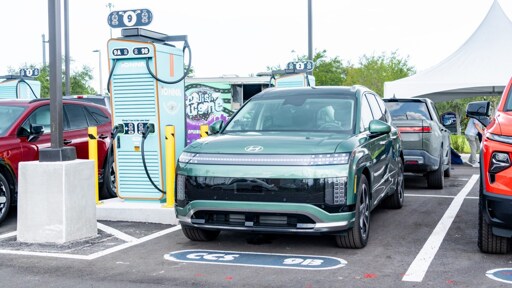
We have been wanting an EV (something other than a Swasticar) for our next vehicle and think we could deal with the extended charging times required during a long drive or trip, but we ended up ruling out an EV.
For us the big problem is the difficulty getting parts and service. Service for the models we looked at is only available at dealers (and only some dealers), and parts are regularly not in dealer stock.
We really don’t want to risk taking a cross-county trip and having the car break down 200 miles from the nearest mechanic. With the additional real possibility of having to weeks weeks (or months) for a part, an EV is not an appealing choice for us, at least not yet.
What are you expecting to break down? A modern internal combustion engine plus continuously variable transmission is one the world’s most complex pieces of engineering in common use today.
An electric drive system is trivial in comparison.
I’m in the process of running a 6-20 outlet for ev charging that doesn’t heat up mt panel or cause a huge draw. 240@16Amps is like 6+miles. Which means my commute is charged up in just under 3 hours. Yes, I could just hardwired something more exciting, but I want to slow charge my battery, but give it at least 240v to avoid the losses in winter.
All the messaging about fast charging speed is focused on the wrong thing. EV drivers should be able to do the vast majority of their charging at home or at their destination. The messaging should be about getting chargers in more homes, apartment complexes and workplaces. Speed doesn’t matter as much if you’re going to be parked for half the day or overnight. That’s something that gas simply can’t do.
Fast charging stations should only be necessary for road trips, where you should be taking a break every so often anyways.
The fact that so many people don’t think about this or are unaware shows how well the propaganda worked.
Here is a car that is by far the easiest car you’ll ever own, the power to run it is the cheapest you’ll ever see, and 99% of your trips will be within one charge/tank meaning you’ll never need to worry about range ever - but the propaganda convinced them all that that’s a deal breaker.
As an EV owner the road trips we take are the vast minority of driving anymore. When we do there are options.
- plan out your route and stops. Requires maybe 15 minutes of planning before your trip. You pick a place with food nearby, get out for 30 minutes, stretch, eat your meal, and you are good until the next meal.
- if you are one of the 80% of households with 2 cars, take the other car for that roadtrip.
- get a rental car for your trip. (Remembering that a couple hundred for a rental car is vastly cheaper than paying for gas for 10+ years)
the vast majority of their charging at home or at their destination.
Absolutely true, which is also why I found it extremely annoying when reviewers began claiming that range wasn’t as important as fast charging speeds in daily use. Luckily most have stopped that shit, probably realizing there’s a reason most people want good range, and this is one of them. Also charging at home/destination cost way less than using a fast charger, and it’s better for battery life too.
Speed doesn’t matter as much if you’re going to be parked for half the day or overnight.
The apartment complex and workplace chargers I’ve seen all limit how long you’re allowed to leave your car parked at them. I suppose speed doesn’t matter in the sense that having to move your car 20 minutes later isn’t much less annoying than having to move it 4 hours later. Still, I wouldn’t want an EV without my own garage even if I never went on road trips. It seems like a pain.
Considering how inexpensive it is to put in a 30A, 50A, or 60A circuit, and how modern L2 chargers can both downrate dynamically and be activated with simple apps or cards, this is not a difficult problem to solve.
Then you have where my apt had another company put in and manage the charges but they charge 15 cents more a kw then the fast charger around the corner.
I don’t mind sitting every so often in the morning drinking some tea while charging but it would be nice if it’s faster
Ugh, greedy landlords.
That’s a matter of location I guess. Here you sometimes have to pay a small extra fee to keep it there the whole day. But that may be also because there are plenty of public chargers around
Yeah EVs seem almost non-viable if you live in an apartment complex right now, which is a shame. At least where I am
You can literally have just a simple wall plug and charge a car. It doesn’t need to be a fitted wall-mounted charging box. Yes, it is much slower and takes 24+ hours to charge the car completely but most people don’t actually use much of their battery per day anyway so if you plug in every night when you get home, you’re not going to have a problem for the majority of the time. And those are a very cheap socket run that an apartment’s body corporate could/should install.
I have been an EV owner since 2018 and I have never had a “level 2” charger installed. I’ve been fine with just plugging into the wall. Now, granted, my cars have been 80-125 mile range vehicles. But it’s been fine.
Most EVs charge at home doesn’t mean it’s not cheaper than fossil fuel even using the charger down the road. As for convenience, using a public charger is like pouring fuel in at the petrol station.
This, and the cheapest charging option will always be at home.
If you can’t charge at home, an EV is not worth the additional cost vs a combustion or hybrid.
Ignoring the better driving comfort of an ev, which is valuable on its own, it’s still much cheaper to charge on the go, than buying gas.
that’s not always true, its free at my workplace I just need to unplug every two hours. They do that so people don’t sit on the chargers all day. I know people without home charging, for them its 6kw charging at work, public parking and a visit to a fast charger when needed. They say its still cheaper than gas.
That’s basically me.
No home charger because no off street parking and fuck NJ.
That is an idealistic way to look at it. In practice, charging anytime a car is parked is expensive:
-
Utility companies will often charge a premium on electricity spent during business hours. This alone makes it uneconomical to charge the car by day (eg while you’re at work).
-
Charging on public infrastructure will often include a “convenience premium” - electricity will be more expensive than charging at home.
-
A lot of the time charging will be limited by time, thus requiring you to go out of the office and move your car in the middle of work. Not possible for everyone.
-
My experience is that “energy providers” discovered subscriptions. And charging “out of network” is mor expensive - especially important when traveling.
Reality is that with an EV the only economical approach *today * is:
- to charge it at home, at night
- hopefully produce your own electricity, if you can (photovoltaic + battery)
- use quick charge stations for longer drives
If you can’t charge it at home (eg you live in a flat or an apartment complex), you’re basically effed.
- Depends on your utility plan and if it’s time based or not. The chargers at work are the same price from 7:00 to 22:00.
- Yes
- Depends on the office. Plenty of office parks don’t require you to move.
- I’ve avoided (as best I can) the “energy providers” that charge and extra fee just to charge. Obligatory fuck ChargePoint.
I can’t charge at home (fuck you NJ) but still have two EVs that I take to the single public charger (limited to 2 hours) nearby because fuck gas powered cars.
Maybe next time don’t make sweeping generalizations about things you personally haven’t experienced.
Answers “possibly” or just straight up “yes” to literally every point, and then criticizes them for generalizing.
While EVs are 100% the way to go, acting as though the very real problems and drawbacks faced by real people don’t exist is disingenuous and just gives anti-EV people more ammo.
-
You go inside gas stations because you HAVE to, not because you WANT to. Same with EVs.
“Nobody stops to fuel their vehicle taking gasoline, gets out, rushes as fast as possible, puts as much fuel in the car as possible, and gets back in the car and drives away”
WTF? This is exactly how I have refeuled every single time I have ever gotten gas. If I could pay a little extra for a pit stop style refuel I would. Who wants to linger around gas fumes, processed “food” , and energy drink boner pills?
A big draw of EV for me is that 99% I don’t need to stop anywhere to recharge. If I do though I want it to be as fast as possible.
We bought an EV and it took a few trips for it to click that you don’t need to charge to 100% or even 90%. Hook it up, hit the restroom, buy a latte, then get back on the road with 50% charge.
You only need enough to get to wherever your longer parking+charge is going to be.
We also figure out the range anxiety. Getting down to 10% isn’t a big deal, especially if that last stop is going to get you back to full charge. Our EV doesn’t even have that great of range to start with.
Don’t forget the unmutable unskippable multimedia advertisements on the fuel pump!
(Yes, I know some of them are allegedly mutable, but I have yet to find one.)
I’ve been told that a butter knife placed in just the right part of the speaker slot unveils the hidden permanent mute button
Just sounds like a CEO who doesn’t want to invest anything in upgrading anything.
Of course I want to be out of there quicker. I’m driving to somewhere and it sure as shit is not to a charging point.
When I had an ICE car, it was exactly the same. With our BEV however, I don’t generally need to charge “on the way” as I can start each morning fully charged, and have more than enough battery for a full day.
It’s only on longer trips we need to charge, and on those we can easily combine charge and a short break.100%. The time I spend at a fucking gas station is the time the gas is flowing + the overhead of tapping the card. Plus, if there are ads and the mute button doesn’t instantly work, leaving a 1 star review.
“If there are ads”
WTF where do you live?
Ads at pumps are fairly common in the US. They been around since 2019 if not earlier.
We have ads in Australia too. :(
I think it means specifically in the context of long road trips, the kind where everyone gets out to stretch their legs and take a piss while stopping for gas. On the other hand, I was under the impression that EVs simply didn’t have the range for such activities, so IDK.
My EV has a 330 mile range, and a full recharge at home costs me $4. It’s amazing.
If I remember correctly, the new BMW 3 series EV is like a 430 mile range.
4 hours driving and a half hour charge while doing a biobreak is perfectly doable these days. You can keep that up a long time. Personally not a fan of that long a stretch and we’re doing more 2 hours driving and a break.
I was under the impression that EVs simply didn’t have the range for such activities, so IDK.
Maybe 10 years ago that was true, but now ranges and charging speeds have gotten much better. The infrastructure of gas stations is still better for easy road trips without pre-planning though.
Where I live (Denmark) there is no need for planning your charging, there are charging stations everywhere. I think the same is true for Sweden and Norway.
It’s only a matter of when the infrastructure is established enough. Scandinavia is among the more developed regions with regard to charging infrastructure, but it will be the same in other countries soon.
Modern EVs have hundreds of miles of range and can easily do road trips as long as there are chargers along the route. I haven’t done any cross county trips but I have driven from NorCal to SoCal and eastern to western CO without issue.
It’s very possible. Aging Wheels on YouTube has a couple videos on road tripping in an EV.
Mine, an MG4, has 400 km. Enough to make you need a stop. And it gets from 20% to 80% in half an hour or less (50KWh+)
Sure, maybe a few min with a family I guess. But if traveling alone it’s still quick stretch, in and out of restroom in less than 5min.
In Europe I’ll grab an espresso, add an extra min I guess for that.
I know some families will spend maybe 20-30min at such places, but ideally that’s a choice not forced by charging time. Doesn’t need to happen tomorrow, but I do think fast charging is a desirable goal.
I agree with you. I always hurry to get out of there ASAP.
This is pure cope from a nation that is a long way behind the rest of the world on EV technology. I’ve done some very long road journeys, 900+ km in a day, and having an EV would likely have added at least an hour to that day, even more if I was towing.
The reality: “Nobody stops to fuel their vehicle taking gasoline, gets out, rushes as fast as possible, puts as much fuel in the car as possible, and gets back in the car and drives away,” Cutler said.
This is exactly how I go about my business at a fuel stop. Maybe do a few stretches and check everything on the roof isn’t working it’s way loose, but once the pump clicks off, I’m goneburgers.
I’ve done some very long road journeys, 900+ km in a day, and having an EV would likely have added at least an hour to that day, even more if I was towing.
You do realize that 99.999% of people don’t drive anything like that on a regular basis right?
As someone who’s had an EV exclusively since 2018, several makes and models, and not near a massive metro area like NYC, LA, etc. where infrastructure has been extremely built out for a long time. I’ve made long trips, and the total time difference across an entire day of driving, accounting for stops for meals, bathrooms, etc. that would have happened anyway with an ICE vehicle, the trips were maybe total an hour and a half longer spread across that day.
Does it take more time on long distance trips? Yes. Does it actually matter when those long trips are usually going to be entire day or even multi-day trips anyway? Not really.
I’ve found non-EV owners usually still think of charging the car like filling it with gas, full every time with all the time it takes to fully charge. But you almost never fully charge the vehicle while on a trip, only at the beginning and maybe end. The batteries charge significantly faster when at a lower state of charge, so most travel happens in the middle between 20-70%. It’s faster to charge twice for 15 minutes at a fast rate, than taking an hour or more to fully charge each time. And the built-in navigation and charging systems take that into account along your route to optimize those stops to take advantage of those higher charging speeds. I also have noticed that non-EV owners significantly underestimate the amount of time they take when stopping to get gas, use the restroom, etc. The real world time difference between those quick charges where you can let the car sit unattended while you use the restroom, grab snacks, etc. versus having to stand at the pump and then do those things, is much closer than most people tend to think.
This is a really common, and really stupid argument people make.
Someone will say “an EV isn’t right for me because I do X”
And someone will almost certainly say something stupid that starts with the word “statistically”
I don’t give a fuck about what people do statistically, I care about what I do with my vehicle. And I’m not going to buy a vehicle that does 95% of what my current vehicle does.
I’m just pointing out that the common assumptions about EVs based on reading other online comments from non-EV owners may not be accurate.
You might not have those assumptions, but from my experience talking to thousands of people over the last nearly decade is that very few non-owners have it accurately.
Good to know you’re the overtired and in a rush driver that the defensive driving courses warn me about. Worse if you’re towing something.
I’ve got shit to do, especially when I’m doing that type of distance.
Got our first ev in august. Needed to install a lvl2 outlet right away. Now we have no issues or concerns with daily use. A road trip wouldn’t be bad as is, you can walk away from a plugged in car where you are supposed to stay by a ICE filling up. So spend the 15 minute stop walking in the station, getting a drink or taking a piss.
I’ve found many (most honestly) non-EV ownershave some pretty big and fundamental misconceptions about EVs. They’re not usually working from a point of reality when thinking about these things.
From my experience talking to people about my vehicles since 2018, most think that the car needs to be fully charged every time, and think that it takes multiple hours. They don’t seem to realize that charging speeds vary based on the charge level (even though they literally see this exact thing with their phone charging every day. That you can use that to your advantage on longer trips, and that the built-in navigation systems automatically do this planning for you.
And they also tend to underestimate how much time they actually take when stopping for gas on trips. They usually just think about the time they’re standing there at the pump getting gas, but ignore the time they take to use the restroom, get snacks/drinks, heck even the minute or two to walk into the gas station and back to the car… all of which would be unattended charging time in an EV. And those all add up quickly.
I remember one of the arguments against EV’s were that “there’s so few chargers compared to gas”.
And then you realise that chargers are literally at homes, workplaces, parking lots and ALSO at gas stations.
Which makes speed less important. The headline is spot on.
And then you realise that chargers are literally at homes, workplaces, parking lots and ALSO at gas stations.
Perhaps if you were in an apartment complex without access to a home charger, but many complexes have added EV charging as amenities. Most people don’t drive very far on a daily basis, well within the range of most EVs. Heck, I make a 50 mile round trip commute to the other end of the city and I only charge once a week at home usually, unless I’m doing a bunch of other stuff outside work.
Charging at home means you almost never need to charge anywhere else unless you’re on a trip, that most people do only once or twice a year. And for trips, charging stations along highways were some of the first to be installed.
The technology should still be improved as much as possible.
I think for my commute I would prefer a battery chemistry that needed slower charging, if it was cheaper or lasted longer or was safer, or lighter, or whatever. But I think there will always be use cases where it’s worth maximizing uptime, like long-haul driving.
I wonder if trucking will evolve to do tractor swaps, where rigs coming into charge up will hand off trailers to fresh tractors. That way the cargo doesn’t have to take up space in the charging lot or whatever. Or they might do battery swaps. I imagine for above some threshold of cost/minute downtime, the hardware for doing swaps will be worth the extra cost.
In most jurisdictions, trucks are required by law to stop for the driver to rest every 5 hours or so. You can just charge the vehicle then.
oh yeah, duh. the vehicle’s uptime is bound by its operator’s.
Everything is a tradeoff. At this point there are more valuable things to be spending money on than making chargers that are as fast as possible. Not all cars can charge at 500+kWhs many cannot even do 100kWhs. IMO better to spend money upgrading all the slow 7-50kWh chargers. As well as putting in more slow charging near residents. Kerb charging for people that dont have a driveway in cities or chargers for those living in flats. That would serve people better then spending more money on something very few can actually benefit from.
All those things matter:
- number of EVs on the roads
- number of private chargers
- number of public chargers
- average range
- average charging speed
- average trip distance
For EVs to work you need to have adequate combination of all of them. You can’t simply say “charging speed doesn’t matter” while ignoring range, number of EVs and distance people travel. Why do people insist on focusing only one thing at a time? First it was all about range, not it’s all about charging speeds. It’s not that simple.
iow - charging stations can extract more revenue from drivers the longer the charge takes.
Sounds like Cutler, an engineer, has some MBA brainrot.
Gas stations can also raise the price of gas. You are realizing that both are the same. The differentiator is the possibility of charging at home without ever going to a dedicated station.
I think their point is that for a business a captive audience is a good thing. Kind of like how some grocery stores have noticed that when checkout takes longer, people are more likely to buy the drinks and snacks they put for sale near the checkout line. Likewise a charging station could have an overpriced restraunt selling low quality burgers for twice the price of the restraunts 2 minutes away by car, and customers will eat there because, they don’t want to sit around for 30 minutes, and then drive down the road and stop for another 10.
Unless I’m missing something and fast chargers charge by the watt instead of the hour, in which case that’s pretty big BS.
Unless I’m missing something and fast chargers charge by the watt instead of the hour, in which case that’s pretty big BS.
Why would that be BS? That’s exactly how you pay for any other fuel. Why should EV charging be different?
Almost every EV charger is based on the amount you charge, time is irrelevant. The only places they charge by time are areas where the law requires them to essentially be a power company to charge for the power itself. So they get around that limitation by charging for the time instead.
I’ve traveled across the US and have never been to any areas like that however. I know they exist, but they’re extremely uncommon. Nearly everything is charged by the watt.
Do you know battery swap ?